Skip links

Guides

How to Stop Copycats & Counterfeiters on TikTok Shop

Get In Touch

651-256-9480

Table of Contents

TikTok Shop has exploded into one of the largest social commerce platforms in the world, and with that growth comes a rising wave of counterfeit products and copycat sellers. If you are a brand owner watching unauthorized versions of your products pop up across TikTok Shop, you are not alone. Learning how to stop copycats and counterfeiters on TikTok Shop is now a critical piece of any modern brand protection strategy. Without swift, informed action, knockoff sellers can erode your revenue, damage your reputation, and confuse the customers you have spent years building trust with.

At Gallium Law, our team of intellectual property attorneys helps brand owners take control of their presence on social commerce platforms. Whether you need to file takedown requests, pursue enforcement actions, or build a long-term protection plan, we are ready to help. Contact Gallium Law today for a free and confidential consultation.

Why TikTok Shop Has Become a Hotspot for Counterfeiters

Social commerce blends entertainment with impulse purchasing, and that combination creates a perfect environment for bad actors. TikTok Shop allows sellers to list products directly within short-form videos, livestreams, and the platform’s built-in storefront. Consumers often make split-second buying decisions based on viral content, and they rarely pause to verify whether a seller is an authorized retailer.

Counterfeiters exploit this behavior. They copy product images, mimic brand names with minor spelling changes, and price their knockoffs just low enough to undercut legitimate sellers. Because TikTok’s algorithm rewards engagement and sales velocity, a counterfeit listing can gain traction quickly before brand owners even discover it.

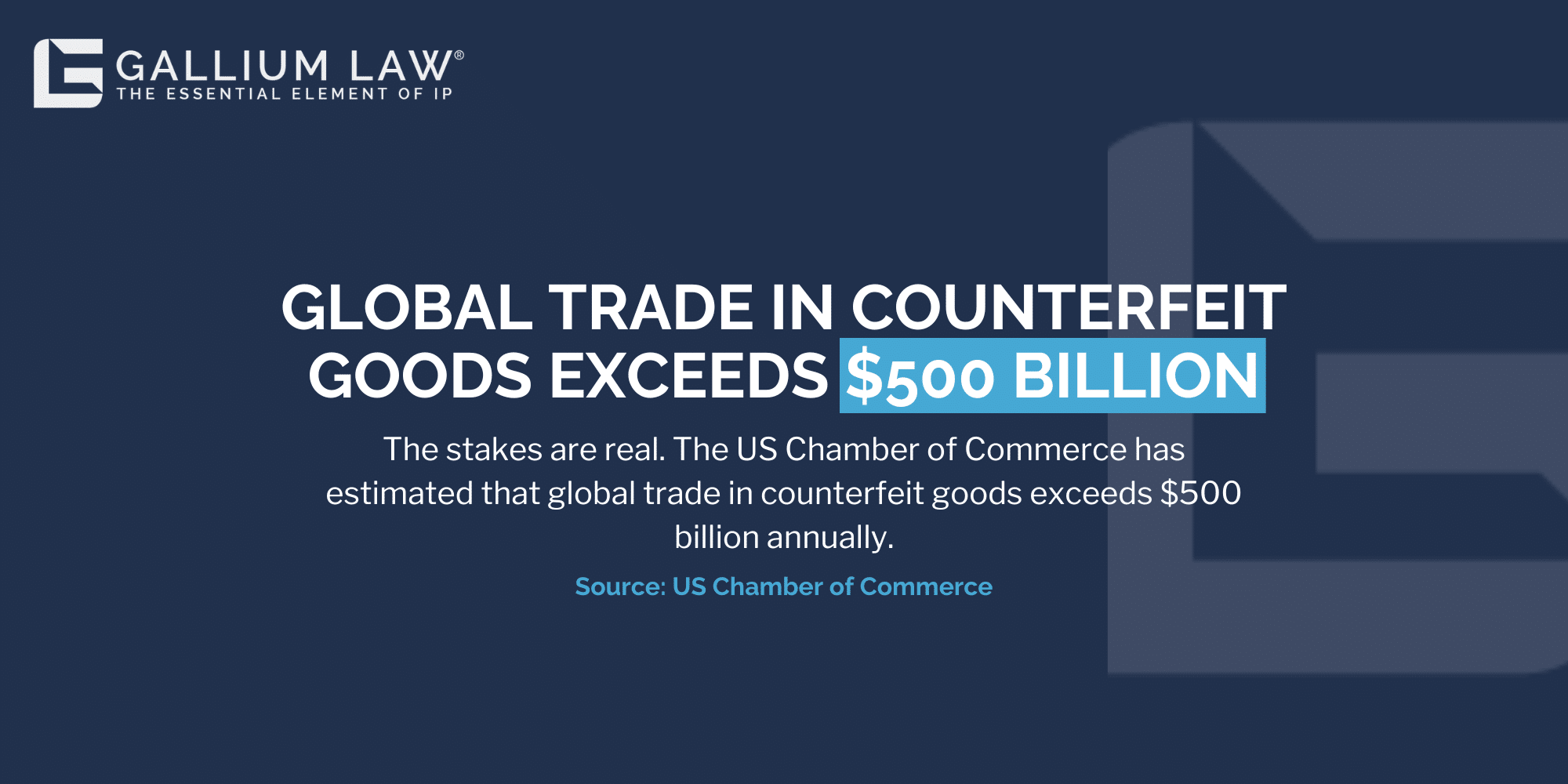
The stakes are real. The US Chamber of Commerce has estimated that global trade in counterfeit goods exceeds $500 billion annually. Platforms like TikTok Shop represent a growing share of that figure, and brands that fail to act early often find themselves playing an expensive game of catch-up. Understanding how trademark protection works across different product categories is an important first step toward defending your brand in this space.

global trade in counterfeit goods exceeds $500 billion annually

Recognizing the Signs of IP Infringement on TikTok Shop

Before you can stop counterfeiters, you need to know what to look for. Infringement on TikTok Shop can take several forms, and not all of them are obvious at first glance.

Trademark infringement is the most common violation. Unauthorized sellers may use your registered brand name, logo, or tagline in their product listings, packaging, or video content. Some go further, using nearly identical branding with slight modifications designed to evade automated detection.

Counterfeit products represent a more aggressive form of infringement. These are goods manufactured to look like your authentic products, often using your branding or logos without permission. They are typically produced at lower quality standards, which means dissatisfied buyers may associate that poor experience with your legitimate brand.

Copyright infringement also plays a role. Sellers may lift your product photography, marketing copy, or video content and use it to promote counterfeit goods. This form of content theft is particularly common on TikTok, where video assets can be downloaded, re-edited, and reposted with minimal effort.

If you suspect your copyrighted materials are being used without authorization, documenting the violation early strengthens your position for enforcement. Patent infringement can also be found on the TikTok shop. Third parties may sell products that use your patented technology or design without your consent. Unlike trademark and copyright infringement, patent infringement may be less immediately obvious and can require in-depth analysis to identify.

Using TikTok’s Intellectual Property Protection Center

TikTok offers a dedicated enforcement tool for brand owners called the Intellectual Property Protection Center (IPPC). This platform allows rights holders to register their intellectual property, submit infringement complaints, and monitor the status of enforcement actions.

To get started, you will need to create an account and register your IP assets within the IPPC. This typically requires providing trademark registration certificates, copyright documentation, or other proof of ownership. Once your IP is registered, you can search for potentially infringing listings and file complaints directly through the platform.

Our guide to the TikTok Intellectual Property Protection Center walks through the registration process, complaint-filing steps, and best practices for getting results.

When TikTok receives a valid complaint, it may remove the infringing listing, issue warnings to the seller, or suspend repeat offenders. The IPPC also provides a complaint tracking dashboard so you can follow each case from submission through resolution.

While the IPPC is a valuable tool, it works best when paired with a broader enforcement strategy. Automated tools and platform-level reporting are helpful, but they are not a substitute for the legal foundation that makes enforcement effective in the first place.

Building a Proactive Brand Protection Strategy

Reacting to infringement one listing at a time is exhausting and inefficient. The most effective approach combines proactive monitoring with strong legal groundwork.

Secure Your Trademark Registrations

Everything starts with registration. A federally registered trademark gives you the legal standing to file infringement complaints on TikTok Shop, Amazon, and virtually every other e-commerce platform. Without registration, your enforcement options are severely limited.

If you sell products in multiple categories, make sure your trademark registrations cover all relevant classes. The IP attorneys at Gallium Law can help you evaluate your current trademark portfolio and identify any gaps that counterfeiters could exploit.

Monitor TikTok Shop Regularly

Counterfeiters move fast, and a listing that appears today can generate hundreds of sales before the end of the week. Set up regular monitoring routines to search for your brand name, product names, and key product identifiers on TikTok Shop.

Some brands invest in third-party monitoring software that automates this process. Others assign internal team members to conduct manual searches on a weekly basis. The right approach depends on your brand’s size and the volume of infringement you are dealing with.

Document Everything Before Filing

Strong enforcement actions depend on strong evidence. Before filing a complaint through the IPPC or pursuing legal action, gather screenshots of infringing listings, record URLs, save video content, and note the seller’s account information. Timestamped documentation makes your case significantly harder to dispute.

How to Protect Your IP on TikTok: A Complete Guide

How to Protect Your IP on TikTok: A Complete Guide

This guide explains how to protect your intellectual property on TikTok, including identifying infringement and enforcing your rights. Gallium Law provides practical strategies to help creators and brands maintain control and protect their competitive advantage.

When Platform Reporting Is Not Enough

TikTok’s internal enforcement mechanisms handle a large volume of complaints, but they have limitations. Some sellers create new accounts as quickly as old ones are suspended. Others operate through networks of shell accounts designed to keep counterfeit goods flowing even after enforcement actions are taken.

When platform-level reporting fails to resolve the problem, brand owners have additional legal options. Cease and desist letters, drafted by experienced IP litigation counsel, can put sellers and their suppliers on formal notice. In cases involving large-scale counterfeiting operations, federal court actions may be appropriate.

The SHOP SAFE Act, which has been introduced in Congress to hold e-commerce platforms more accountable for counterfeit goods sold by third-party sellers, reflects growing legislative attention to this issue. While the bill has not yet been enacted as of early 2026, its progress signals a shifting enforcement landscape that brand owners should be watching.

For sellers who also operate on Amazon, the same principles of trademark enforcement on Amazon often apply to TikTok Shop disputes. A coordinated enforcement strategy across multiple platforms produces the strongest results.

Need help determining the right enforcement approach? Call Gallium Law at 651-256-9480 to discuss your options with an IP attorney who understands social commerce.

Protecting Your Brand Through Licensing and Strategic Partnerships

Not every instance of unauthorized selling involves outright counterfeiting. In some cases, third-party sellers may be reselling authentic products outside of your authorized distribution channels. While this is a different problem than counterfeit goods, it can still damage your brand’s pricing structure and customer experience.

A well-drafted licensing and distribution strategy gives you legal tools to control who sells your products, where they sell them, and at what price points. When unauthorized resellers appear on TikTok Shop, having clear contractual terms in place strengthens your ability to take action.

For startups and emerging brands entering the TikTok marketplace for the first time, building this legal framework before problems arise is far more cost-effective than scrambling to respond after the damage is done. Gallium Law’s start-up consulting services help new brands establish IP protection strategies from day one.

The Cost of Doing Nothing

Every day that a counterfeit listing stays active on TikTok Shop, it chips away at your brand. Customers who receive low-quality knockoffs leave negative reviews that follow your brand name across the internet. Pricing pressure from counterfeit sellers forces legitimate retailers to compete on margins they cannot sustain. And the longer counterfeiters operate unchallenged, the bolder they become.

Beyond the immediate revenue loss, unaddressed counterfeiting can create product liability risks. If a counterfeit version of your product causes injury, consumers may try to hold your brand responsible regardless of whether you manufactured the defective item.

The financial and reputational costs of inaction almost always exceed the cost of a strong enforcement program. Brands that treat IP protection as an investment rather than an expense consistently outperform those that treat it as an afterthought.

Developing a comprehensive IP portfolio management approach ensures that your trademarks, copyrights, and patents work together to provide layered protection against bad actors.

Frequently Asked Questions

What legal rights do I need to file a complaint on TikTok Shop?

You will need a registered trademark, copyright registration, issued patent, or other documented intellectual property rights to file an infringement complaint through TikTok’s Intellectual Property Protection Center. Federally registered trademarks carry the strongest enforcement weight, and brands enrolled in TikTok’s programs with an active USPTO registration typically see faster resolution times.

How long does it take TikTok to respond to an IP infringement complaint?

Response times vary depending on the complexity of the complaint and the volume of reports TikTok is processing. Many straightforward trademark complaints are addressed within a few business days, though more complex cases involving multiple sellers or disputed ownership can take longer. Working with an experienced IP attorney can help ensure your complaint is filed correctly the first time, which reduces delays.

Can I take legal action against counterfeit sellers on TikTok Shop in federal court?

Yes. Under the Lanham Act, trademark owners can pursue federal litigation against sellers who manufacture, distribute, or sell counterfeit goods. This includes sellers operating through TikTok Shop or other online platforms. Federal court remedies may include injunctive relief, monetary damages, and in some cases, the seizure and destruction of counterfeit inventory. Gallium Law’s IP attorneys can evaluate whether federal litigation is the right path for your situation.

Take Action Before Counterfeiters Take Your Revenue

TikTok Shop is not going to slow down, and neither are the counterfeiters who profit from it. The brands that protect themselves most effectively are the ones that act early, build strong legal foundations, and work with attorneys who understand the unique challenges of social commerce enforcement.

Gallium Law is an award-winning intellectual property law firm with deep experience in trademark and patent enforcement, copyright protection, and e-commerce brand defense. Our team has helped brand owners across industries reclaim control of their products on platforms like TikTok Shop and Amazon. Do not wait for counterfeiters to define your brand’s reputation. Call 651-256-9480 today or fill out our online consultation form for a free, confidential consultation, or visit galliumlaw.com to learn more about how we can help protect what you have built.