

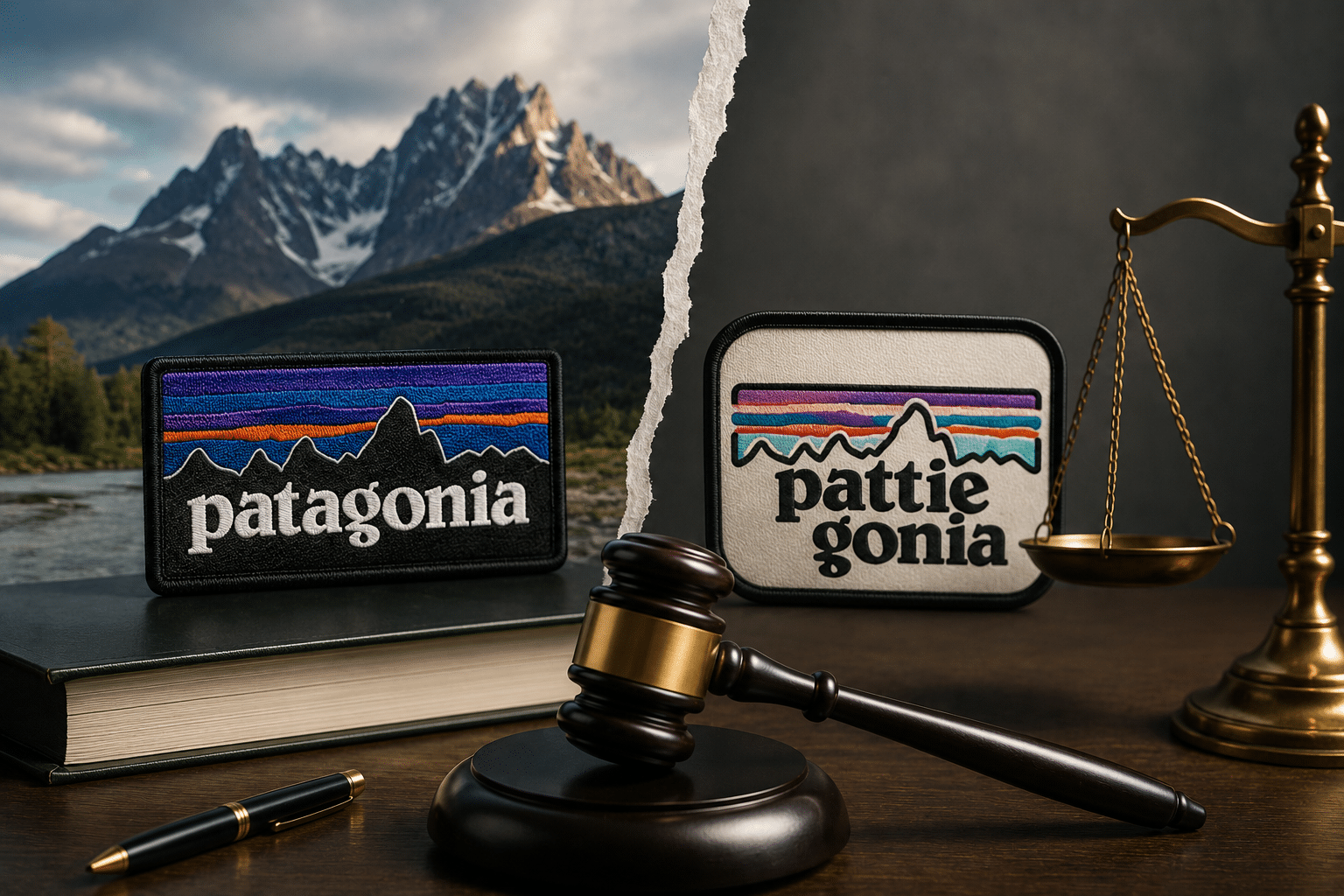

A billion-dollar outdoor apparel company and a drag queen environmentalist with a play-on-words stage name are locked in a federal trademark lawsuit. On paper, the power imbalance looks absurd. In practice, the legal questions at the center of Patagonia v. Pattie Gonia are ones that every brand owner should understand, because the principles being contested in this case apply to businesses of every size.
The dispute is not about who is right or wrong in the court of public opinion. It is about where the line sits between creative expression and commercial infringement, and what happens when a name that started as a joke evolves into a competing brand. The answers to those questions have direct implications for how companies protect their trademarks and how individuals build personal brands without crossing into someone else’s territory.
The Facts Behind the Filing
Wyn Wiley is a drag performer and environmental activist who adopted the stage name Pattie Gonia, a phonetic play on Patagonia. For years, Wiley used the persona primarily for activism, promoting outdoor recreation, environmental sustainability, and LGBTQ+ equality through social media and public appearances. The name was a pun, and it generated goodwill from audiences who understood the wordplay.
In January 2026, Patagonia filed a trademark infringement lawsuit in the U.S. District Court for the Central District of California against Wiley and Entrepreneur Enterprises, Inc. (dba Pattie Gonia Productions). As reported in Time, the company alleges that Wiley breached a 2022 agreement involving the use of the Patagonia name and logo.. Wiley disputes that any binding agreement was reached, characterizing Patagonia’s earlier communication as a request rather than a contract.
The lawsuit was triggered when Wiley filed a trademark application with the USPTO seeking exclusive rights to the name Pattie Gonia for apparel (Class 25), online marketing services, motivational speaking related to environmental sustainability, and the organization of trail and hiking events (Class 41). For Patagonia, that filing crossed the line from persona to competing brand.
Why Patagonia Filed Suit (and Why It Had To)
The public response to the lawsuit leaned heavily against Patagonia. A large corporation suing a drag queen over a pun is not a good look, and Wiley leveraged that dynamic effectively on social media. But trademark law imposes obligations on brand owners that most people outside the legal profession may not be aware of.
The Duty to Police Your Mark
Trademark rights are not self-sustaining. A trademark owner who fails to enforce against known infringement risks weakening the mark’s legal protection over time. If Patagonia had allowed Wiley to register “Pattie Gonia” as a federal trademark for apparel and environmentally focused events, both categories that directly overlap with Patagonia’s own goods and services, the company could face arguments in future cases that it abandoned enforcement. Other potential infringers would point to the Pattie Gonia registration as evidence that Patagonia tolerates similar names in the marketplace. For any business that depends on its name for market identity, understanding trademark protection services is foundational to avoiding that erosion.
The Trademark Application Changed Everything
This is the detail that separates this case from a simple parody dispute. When Wiley was using Pattie Gonia as a stage name for activist work, the legal risk to Patagonia was limited. Stage names and parody uses of existing marks receive some degree of First Amendment protection. But filing a trademark application is a commercial act. It is a request for exclusive legal rights to use a name in specific categories of commerce. As stated in the recent NBC article, the moment Wiley began selling branded merchandise and filed for trademark registration, the use was “no longer a parody” but “a brand in and of itself.” That shift from expression to commerce is exactly where trademark law draws its sharpest lines.
Likelihood of Confusion: The Legal Test That Will Decide This Case
Trademark infringement claims in the United States are decided primarily through the likelihood of confusion analysis. The question is not whether the two names are identical. The question is whether an ordinary consumer encountering both marks would be confused about the source, sponsorship, or affiliation of the goods and services being offered.
The Factors Courts Consider
Federal courts apply a multi-factor test that examines, the similarity of the marks (e.g. appearance, sound and/or connotation), the similarity of the goods and services, evidence of actual confusion, the defendant’s intent, and the popularity of the existing mark, among other considerations. According to FindLaw’s legal analysis, both “Pattie Gonia” and “Patagonia” reference a mountainous region in South America, which could cut in either direction depending on how the court weighs geographic descriptiveness against the commercial context. The overlap in trademark classes, particularly apparel and entertainment/education services, works in Patagonia’s favor because it places both marks in the same competitive space.
Patagonia’s Consumer Confusion Evidence
Patagonia’s complaint includes screenshots of social media posts where consumers expressed genuine confusion about whether Pattie Gonia was affiliated with Patagonia. That evidence is significant. Trademark cases are often won or lost on whether the plaintiff can demonstrate actual marketplace confusion, not just theoretical similarity. Social media posts from real consumers asking whether there is a connection between the two names make it harder for Wiley to argue that nobody is actually confused. These posts go beyond hypothetical analysis and into documented consumer behavior.
The Parody Defense and Its Limits
Wiley has characterized the use of “Pattie Gonia” as parody and fan art. Parody is a recognized defense in trademark law, but it has boundaries. A parody must simultaneously call the original to mind and make clear that the new use is not affiliated with the original. When the parody itself becomes a commercial brand, competing in the same product categories as the original mark, the defense weakens substantially. Selling apparel under a name that sounds like Patagonia while also operating in the outdoor and environmental sustainability space is a difficult set of facts to defend as pure parody. Making sure your own mark is inherently distinctive when filing with the USPTO is the clearest path to avoiding these conflicts from the start.
The Settlement Standoff: Where Things Stand Now
Both parties have indicated interest in resolving the dispute without a full trial, but their positions remain far apart. On May 31, Wiley publicly offered to withdraw the Pattie Gonia trademark application if Patagonia dropped the lawsuit. As NBC News reported, Patagonia’s proposed resolution goes further: the company wants Wiley to stop selling and promoting apparel under the Pattie Gonia name entirely and to cease using logos or designs that resemble Patagonia’s branding.
Wiley has rejected those terms, arguing that the demands would effectively shut down the commercial side of the Pattie Gonia enterprise, including brand partnerships that fund environmental advocacy and education work. The gap between withdrawing a trademark application and ceasing all branded merchandise sales is significant, and bridging it will require either creative negotiation or a court ruling.
Patagonia is seeking only $1 in damages but is also requesting legal fees, which Wiley has estimated could exceed $1 million. That structure, nominal damages with substantial fee exposure, is a common approach in cases where the plaintiff’s primary goal is to stop the infringing behavior rather than collect a large judgment. Understanding intellectual property enforcement options helps brand owners evaluate what enforcement really looks like in practice, including the financial dynamics of litigation.
What Every Brand Owner Should Take from This Case
The Patagonia v. Pattie Gonia dispute is a case study in how trademark conflicts develop and escalate. It did not start as a lawsuit. It started as a pun that everyone, including Patagonia, tolerated for years. The conflict only became unavoidable when the informal persona transformed into a formal commercial brand competing in the same product categories.
Register Early and Register Broadly
Patagonia’s enforcement position is strong because the company holds well-established federal trademark registrations covering its core goods and services. The lesson for smaller brand owners is straightforward: register your trademark before a conflict arises, and register it in every international trademark classification system where you conduct or plan to conduct business. A registration gives you the legal standing to enforce. Without it, you are relying on common law rights that are harder to prove and more limited in geographic scope. Our guide on where and how to register a trademark breaks down the practical steps.
Monitor for Infringement Before It Becomes a Brand
The longer an infringing use operates unchallenged, the harder it is to stop. Wiley used the Pattie Gonia name for years before Patagonia filed suit. During that time, the persona built a following, established commercial partnerships, and accumulated goodwill that now complicates enforcement. Early detection and early action, whether through a cease-and-desist letter, a USPTO opposition proceeding, or direct negotiation, are almost always less expensive and less damaging than litigation after the infringing use has become entrenched. This principle applies equally to Amazon marketplace enforcement and to broader trade dress and brand identity protection across any commercial channel.
Understand the Line Between Expression and Commerce
Parody, commentary, and creative expression involving existing trademarks are part of the cultural landscape. Not every play on a brand name is infringement. But the moment that expression becomes a commercial vehicle, with branded merchandise, trademark applications, and revenue-generating services in overlapping categories, the legal analysis shifts dramatically. If you are building a personal brand that references or plays on an existing mark, the safest path is to consult with trademark counsel before filing any applications or launching merchandise. Gallium Law has covered how this dynamic plays out in practice through our analysis of the trademark strategy behind Taylor Swift’s re-recordings, where similar questions of brand identity, registration strategy, and enforcement timing came into focus.
Protect Your Brand Before Someone Else Builds on It
The Patagonia v. Pattie Gonia lawsuit is generating headlines because of its colorful characters, but the underlying legal principles are the same ones that apply to any trademark dispute. A brand name is only as strong as its owner’s willingness and ability to defend it. Waiting until a competitor or imitator has built momentum under a confusingly similar name makes enforcement more expensive, more complex, and less certain.
At Gallium Law, we help brand owners build trademark portfolios that are defensible from day one and enforce those rights when infringement threatens their market position. Whether you need to file a trademark application, respond to a potential infringer, or evaluate your enforcement options, our team has the experience to guide the process. Reach out to start the conversation before a naming conflict becomes a federal case.